Quick answer: A moisture-resistant PP woven bag is a complete package design, not a claim created by the woven fabric alone. Buyers need to define the fertilizer or chemical, humidity exposure, particle size, closure, storage time and handling route before choosing a coating, lamination or liner.
Build the fertilizer and chemical risk profile
Start with the current product specification and safety data. Record moisture sensitivity, dust, particle size, abrasiveness, bulk density, fill temperature and any compatibility restrictions relevant to the packaging components.
Then document the exposure route: open warehouse or enclosed storage, tropical humidity, rain risk during transfer, container condensation, pallet method and expected storage duration. “Moisture-proof” is too broad unless the buyer defines the conditions and an acceptance test.
Compare coating, lamination and inner liners
| Construction | What it may address | Questions to resolve |
|---|---|---|
| Uncoated woven fabric | Basic dry-product containment with air permeability | Is airflow acceptable, and can fine particles escape through the weave? |
| Coated or laminated fabric | Reduced moisture transmission and improved print surface in some designs | What barrier target and adhesion check apply to the finished bag? |
| Separate inner liner | Additional moisture or fine-powder containment | How is the liner fitted, filled, closed and retained? |
| Laminated fabric plus liner | Layered protection for demanding exposure profiles | Is the added complexity necessary, and how will the complete package be validated? |
| Perforated construction | Intentional airflow for selected products | Does ventilation conflict with the moisture or dust-control goal? |
Ask the supplier to identify every layer in the proposed construction and the reason it is included. Barrier decisions also affect filling speed, closure, print appearance and end-of-life claims, so the lowest moisture transmission concept may not be the most workable package.
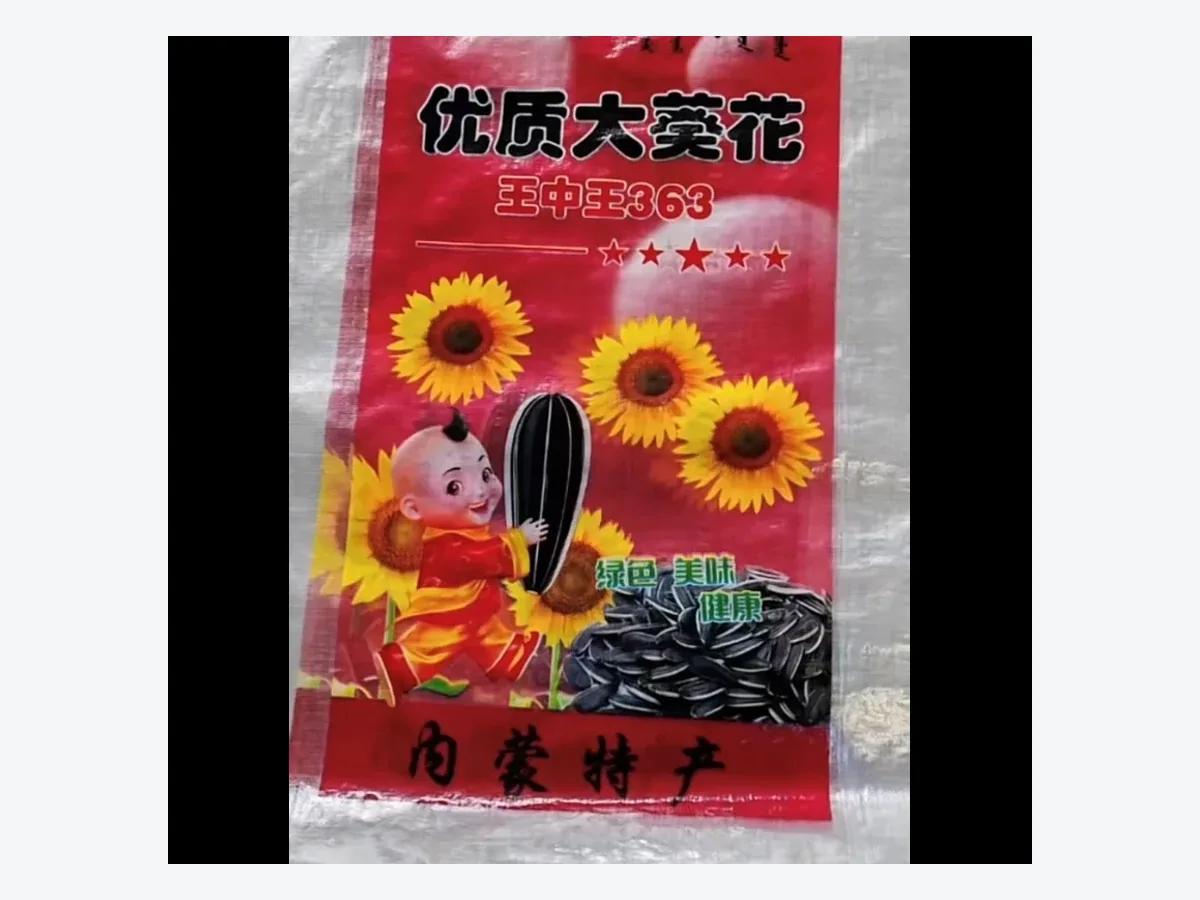
Hongtai’s printed and laminated collection can provide a starting reference for artwork and surface construction. Confirm the exact layer structure and its suitability for the proposed contents before sampling.
Control the opening, closure and export pack
Moisture and powder can bypass a well-selected fabric through an unsuitable closure. Fill the sample to the intended weight, leave the required headspace and use the same sewing or closing setup planned for production.
Export packing should protect unused bags before filling and the finished goods during shipment. Confirm units per bale or carton, outer wrapping, labels, pallet or floor-loading arrangement and how the importer will store empty packaging after receipt.
Confirm compatibility and transportation status
Provide the supplier with enough technical information to review packaging compatibility, but keep regulatory responsibility with the appropriate shipper and importer. If the contents are hazardous for U.S. transportation, 49 CFR 173.24 requires an authorized package that is compatible with its contents and performs under transport conditions.
A standard PP woven fertilizer or chemical bag is not automatically a hazardous-material package. Confirm classification, packaging authorization, markings and documents for the exact product and route before placing the order.
Run a moisture and handling validation plan
- Approve the complete construction, including coating, liner and closure.
- Fill the bag with the actual product and check dust or particle leakage.
- Expose samples to a defined humidity or storage condition that reflects the route.
- Stack and move filled bags through representative warehouse and transport handling.
- Inspect seams, liner position, product condition and any layer separation.
- Record the test condition and pass criteria in the approved specification.
Do not compare two moisture claims if they were tested by different methods or on different constructions. Ask for the method and determine whether it represents the packed product, duration and climate in your supply chain.
Buyer FAQ
Does a laminated PP woven bag eliminate moisture risk?
No package eliminates every exposure. Lamination may improve barrier behavior, but seams, closure, storage, condensation and damage still need to be considered and tested.
When should I request an inner liner?
Consider a liner for added fine-particle or moisture containment. Confirm the liner material, fit, thickness or other relevant specification, compatibility, filling and closure with the final product.
Can the same bag be used for every fertilizer?
Not automatically. Fertilizers differ in particle behavior, moisture sensitivity, compatibility and regulatory status, so each product and route should be reviewed.
What should a supplier sample include?
It should represent the proposed fabric, optional barrier layers, dimensions, seams, opening and closure. Printed appearance can be approved separately if the construction trial must begin earlier.
How should I specify storage conditions?
Describe expected humidity, temperature range if relevant, indoor or outdoor exposure, pallet method, stack height and storage duration. Confirm the validation method based on those conditions.
Prepare a fertilizer bag RFQ
Send the product type, technical or safety information, material and barrier preference, dimensions, application environment, customization, quantity, packing, destination and delivery target through Contact Us. Ask Hongtai to identify any construction, compatibility or test point that must be confirmed from a representative filled sample.