Quick answer: Agricultural products do not all need the same airflow. Choose a PP woven bag only after defining the crop or feed, moisture condition, particle size, cooling needs, contamination risks and time spent in storage and transport.
Make the airflow decision from the product outward
Fresh produce may need ventilation to release heat and moisture, while grain, seed or feed may need stronger dust, pest or humidity control. Start with the product’s respiration or moisture behavior, particle size, cleanliness requirements and expected storage time.
Do not add holes simply because the shipment goes to a warm or humid market. Perforations can improve airflow for the right product, but they also reduce barrier performance and may allow small particles or contaminants to pass.
Compare agricultural woven bag options
| Bag style | Useful when | Buyer checks |
|---|---|---|
| Standard woven bag | The product needs general dry containment and some fabric breathability | Weave, particle loss, dust, closure and stacking |
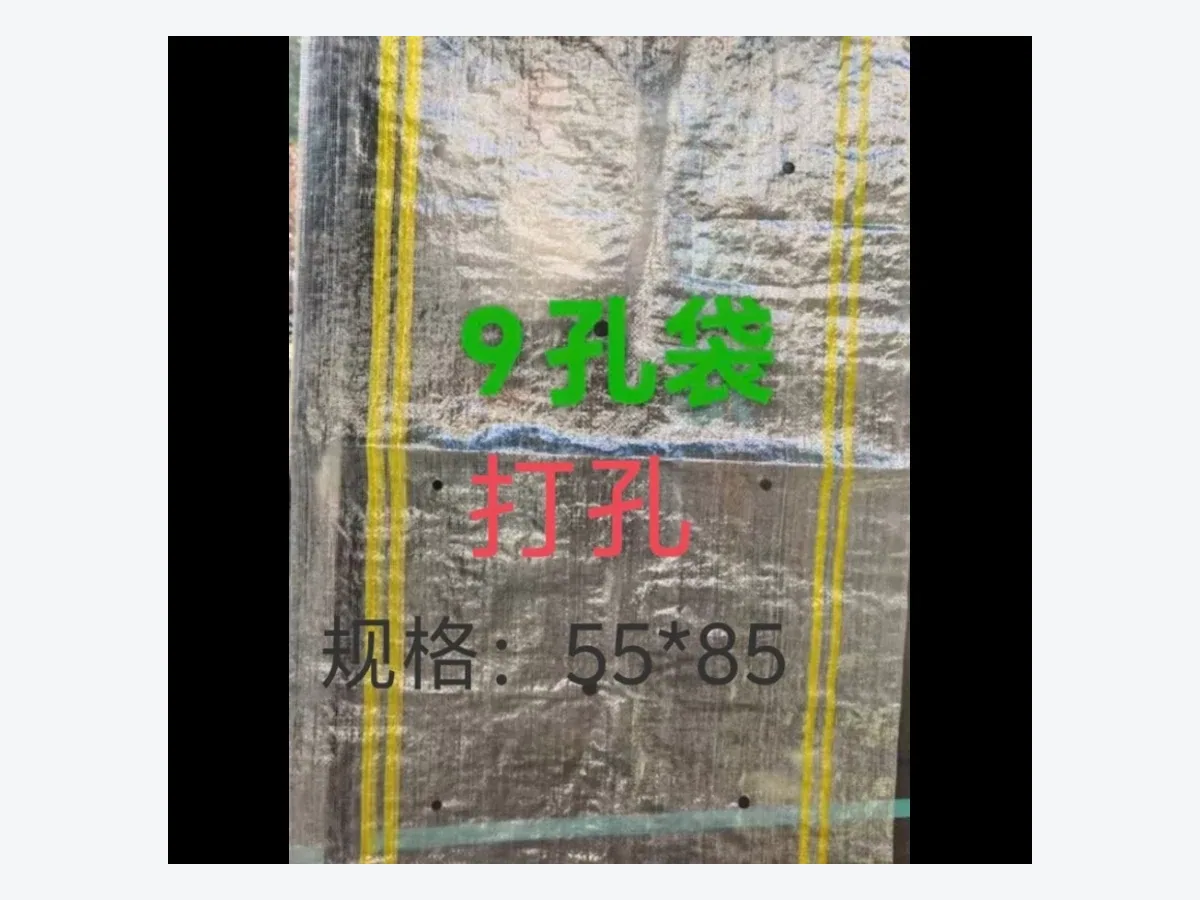
| Perforated woven bag | The exact produce and route require more airflow | Hole number, size, location, product loss and handling |
| Transparent woven bag | Receiving or merchandising benefits from product visibility | Filled-bag clarity, light exposure and print placement |
| Transparent-window printed bag | Branding and a controlled view of the product are both needed | Window size, artwork boundaries and the complete construction |
| Coated or lined bag | The product needs more moisture or fine-particle control | Barrier target, food-contact documentation, filling and closure |
For potatoes, Hongtai’s 55 × 85 cm nine-hole bag provides a current perforated reference. Treat the size and hole pattern as a starting point, then confirm that it fits the produce grade, packed weight, airflow target and customer handling.
Run a packing and distribution trial
- Measure the product condition and temperature at filling.
- Fill the proposed bag to the intended net weight and close it using production equipment.
- Check ventilation, product loss, seam behavior and readable identification.
- Stack trial bags in the intended pallet or floor-loading pattern.
- Move the load through a representative cooling, warehouse and transport cycle.
- Inspect product and bags at the planned receiving interval.
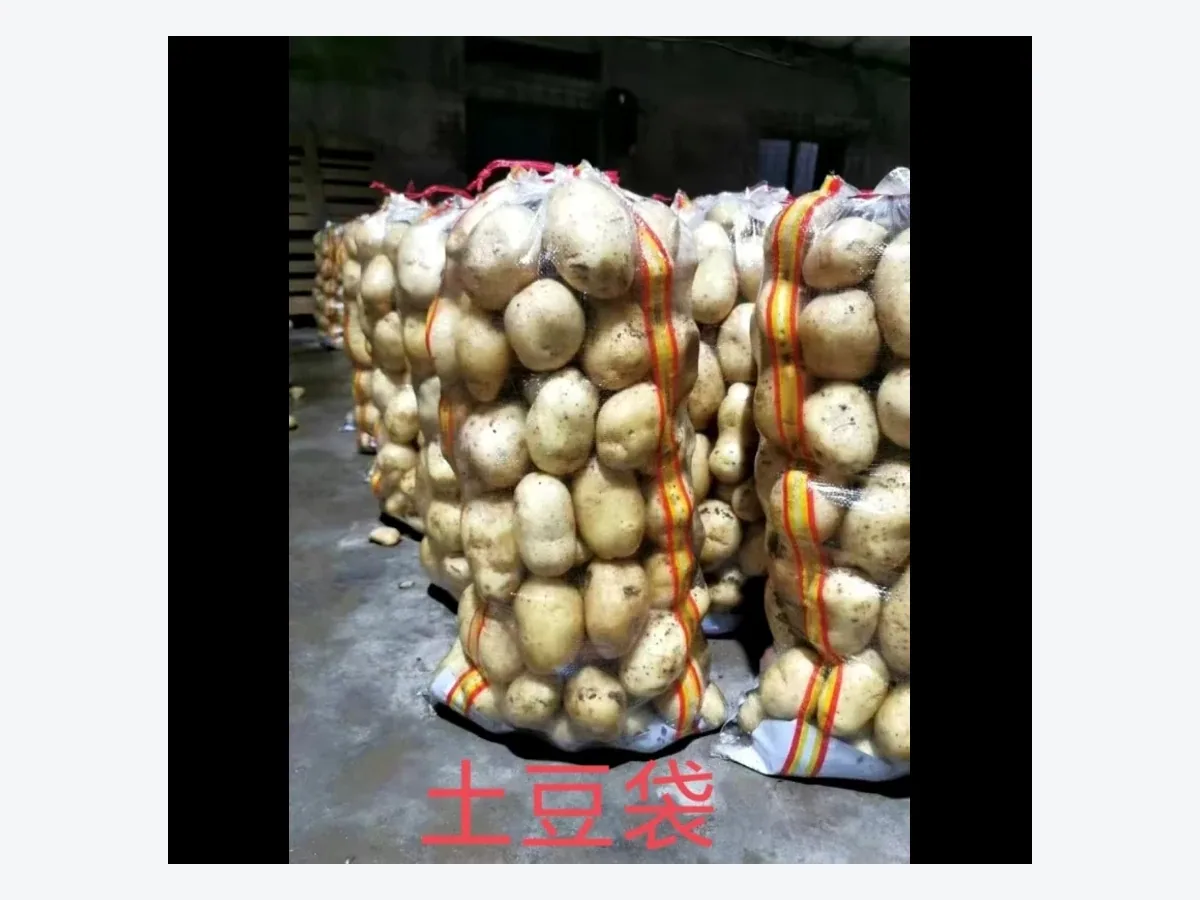
Record what changes during the trial: condensation, temperature, scuffing, holes stretching, seam damage, product loss or stack instability. The result should guide the next specification revision instead of being reduced to a simple pass or fail without context.
Review U.S. food-contact documentation by component
For food-related uses, ask about the exact resin, colorants, coating, liner and inks that may contact the product. The FDA’s guidance on determining the regulatory status of food-contact material components makes clear that authorization and intended use matter.
A broad “food-grade” statement is not a substitute for documentation tied to the complete construction and use conditions. Importers should review the intended food type, contact duration and temperature, and confirm which surface or component contacts the contents.
Plan for U.S. and Southeast Asian supply routes
A U.S. importer supplying regional distribution centers may prioritize pallet stability, readable lot identification and compatibility with automated handling. A Southeast Asian agricultural distributor may also need to account for extended humidity exposure and frequent manual transfers.
These are planning scenarios, not fixed regional rules. Send the actual destination, warehouse conditions, loading method and expected route so the construction and export pack can be evaluated against a real operation.
Buyer FAQ
Are woven bags naturally breathable?
The woven structure can allow some air movement, but actual airflow depends on weave, coating, liner and perforations. Define the product need and validate the complete bag.
How many ventilation holes should a produce bag have?
There is no universal number. Hole pattern should be selected around produce type, size, cooling method, product loss risk and distribution trial results.
Can transparent woven bags be used for grain or seed?
They can be evaluated where visibility is useful, but the buyer must also review light, moisture, contamination, food-contact and handling requirements for the exact contents.
Does a bag for food need an FDA certificate?
FDA compliance is not established by one generic certificate. Review the regulatory status and intended use of the exact food-contact components, with appropriate documentation.
What information is needed for an agricultural bag sample?
Provide crop or feed type, condition at filling, net weight, dimensions, ventilation target, closure, route, storage duration, printing, quantity and destination.
Request an agricultural packaging sample
Submit the product type, material or barrier preference, dimensions, application environment, ventilation or customization requirements, estimated volume, packing, destination and delivery target through the inquiry page. Review Hongtai’s perforated bag collection and include the closest reference in the request.