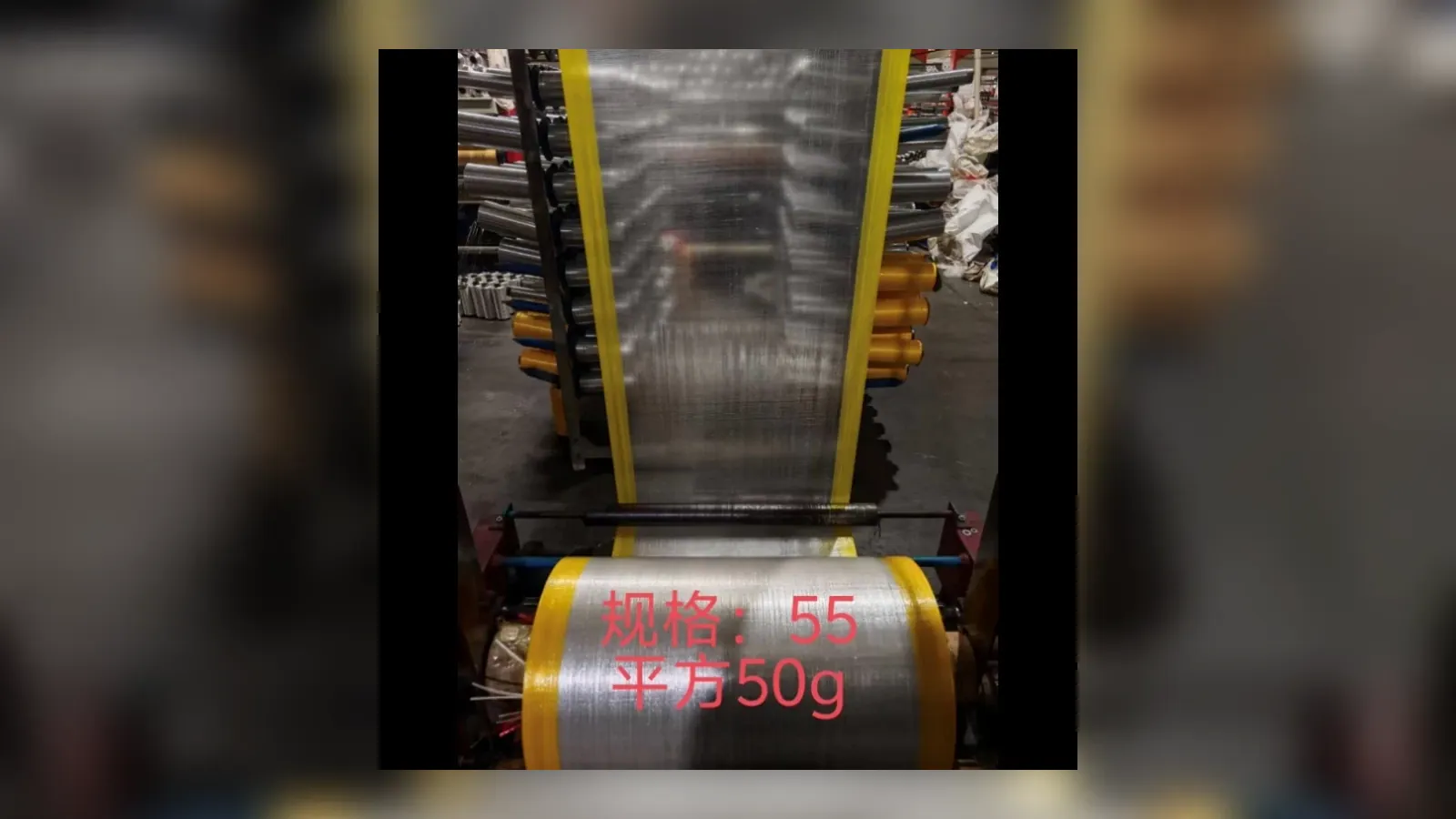
Quick answer: The right transparent PP woven bag is not simply the clearest sample. Buyers should define how much product visibility is needed, then verify the woven construction, dimensions, closure, edge design and filled-bag performance under the actual packing and transport conditions.
Define what “transparent” must accomplish
Visibility can support receiving checks, stock identification and consumer confidence, but buyers should describe the decision it needs to enable. A warehouse may only need to distinguish product color, while a branded retail pack may require a clearer product window and controlled print placement.
Woven polypropylene remains a textured fabric, so it should not be evaluated like a clear film pouch. Request current production samples and review them filled with the actual product, under the lighting used at the packing plant and receiving warehouse.
Build a complete transparent PP woven bag specification
| Specification item | Buyer decision | Validation point |
|---|---|---|
| Dimensions | Flat width, length and usable opening | Measure the sample at agreed points and run a filling trial |
| Construction | Woven fabric, optional coating or liner, edge color and seam style | Confirm each layer and do not rely on a single bag-weight figure |
| Visibility | Full bag visibility or a defined transparent window | Inspect the filled sample against the approved visual reference |
| Ventilation | No holes or a specified perforation pattern | Match airflow to the packed product; holes also change containment |
| Printing | Required text, logo, colors, location and transparent areas | Approve a scaled proof and production reference |
| Export packing | Units per bundle, labels, pallet or non-pallet loading | Confirm receiving and container-handling requirements |
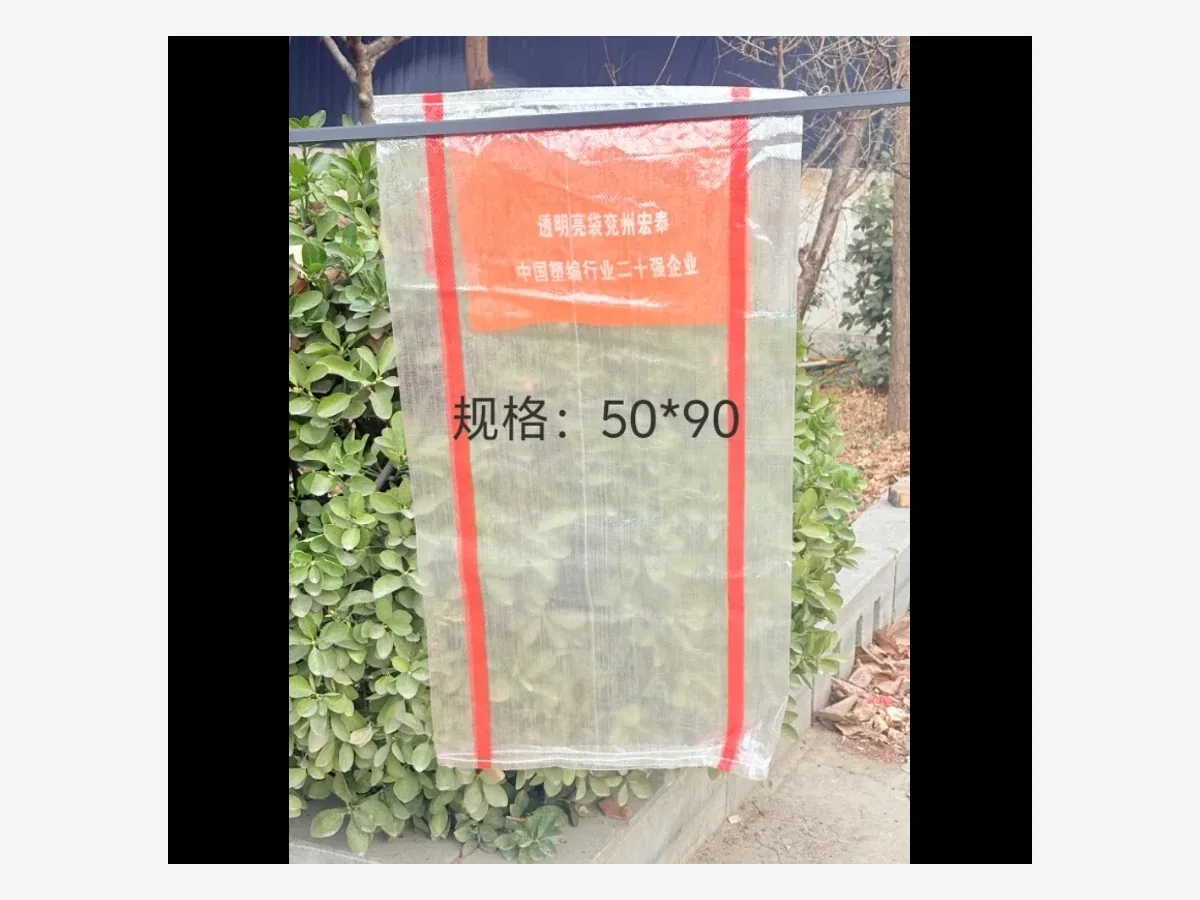
Hongtai lists current transparent sizes including 50 × 90 cm sacks with red edging and 60 × 100 cm sacks with green edging. These are useful starting references, but the selected size and construction still need to match the buyer’s filled product and equipment.
Run sample tests with the real product
- Check the opening and usable dimensions on the filling station.
- Fill to the intended net weight and confirm headspace for the chosen closure.
- Inspect visibility, print readability and any product dust on the inner surface.
- Close the bag using the intended sewing or other packing method.
- Stack, move and store trial bags through a representative handling cycle.
- Record failures and revise one specification variable at a time.
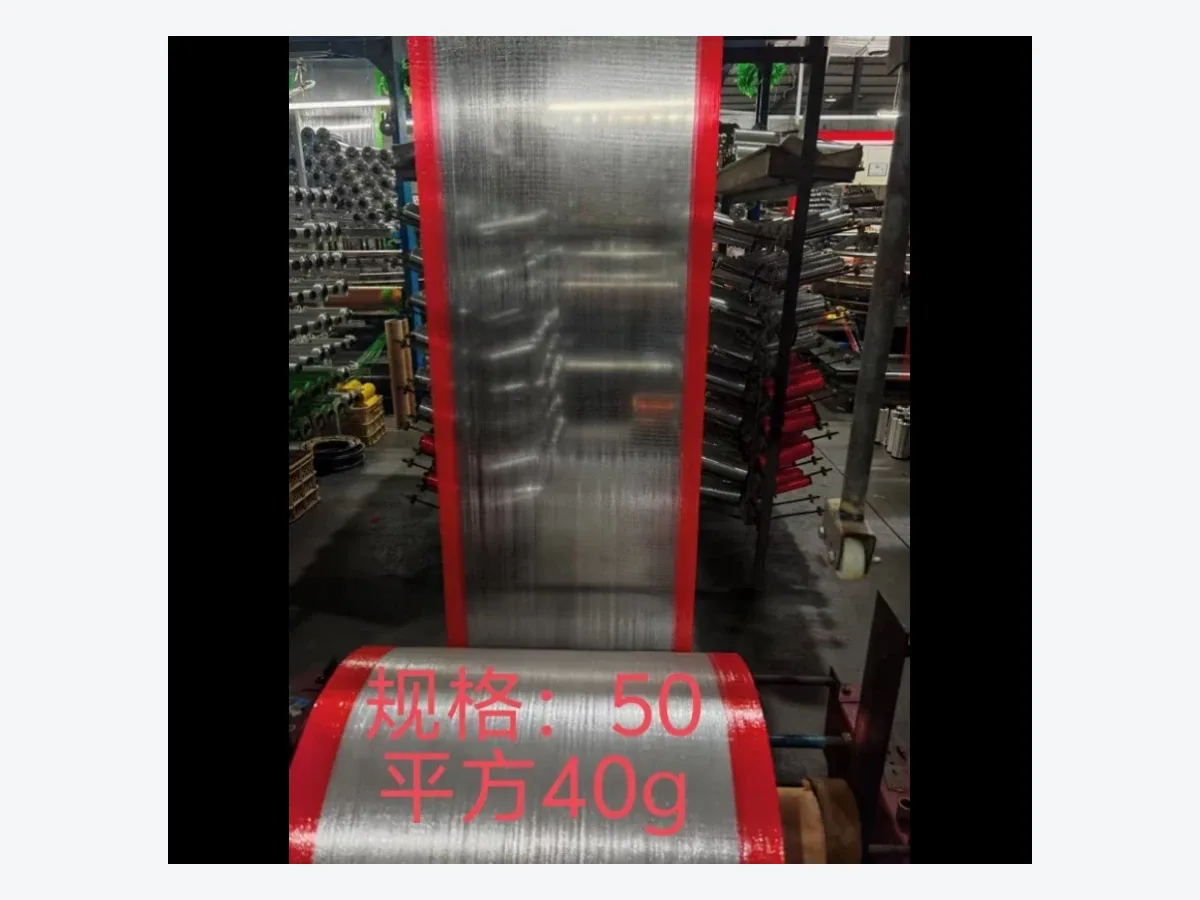
If the contents have sharp edges, fine particles or sensitivity to humidity, ask how the proposed construction addresses those conditions. A liner or coating can change moisture behavior and visibility, so it should be approved as part of the complete bag rather than added after visual approval.
Handle food-contact questions by component and use
For food, feed or seed programs, do not accept a generic “FDA approved bag” statement. The U.S. FDA explains that the regulatory status of food-contact material components depends on the substance, authorization and intended conditions of use.
Ask for documentation covering the exact resin, colorants, coating, liner and printing system that could contact the packed product. The importer should review the documentation against the food type, temperature and contact conditions in the final application.
Common purchasing errors
- Choosing from an empty visual sample: transparency can look different after filling.
- Using “thin” as the complete specification: document construction, dimensions and acceptance criteria.
- Assuming a liner is always better: it may improve barrier performance but can affect visibility, filling and recovery options.
- Ignoring closure headspace: a correct flat size can still be too short after filling.
- Approving print over the wrong transparent area: mark protected windows directly on the artwork proof.
Buyer FAQ
Are transparent PP woven bags completely clear?
No. The woven structure creates visible texture, and clarity varies with the construction, color, coating and packed product. Review a filled production-representative sample.
Can transparent woven bags be custom printed?
Printing can be considered, but the buyer should define which areas must remain visible and approve print location, colors and legibility on the selected construction.
Do heavier bags always perform better?
Not necessarily. Bag mass alone does not describe tape, weave, seams, dimensions or how the filled bag behaves. Use an application-specific trial and agreed acceptance checks.
When should I consider perforations?
Consider perforations when the packed product and process require airflow. The hole pattern must also be checked for product loss, contamination exposure and reduced barrier performance.
How should I request a custom transparent woven sack?
Provide contents, fill weight, desired visibility, dimensions, edge color, printing, perforation or barrier needs, quantity, export packing, destination and delivery target.
Send a transparent bag specification for review
Use the inquiry form to submit the product type, material and visibility target, size, application environment, customization, expected volume, packing format, destination and requested delivery date. If available, attach a filled-bag photo or current sample dimensions so Hongtai can compare the request with its transparent woven bag range.