
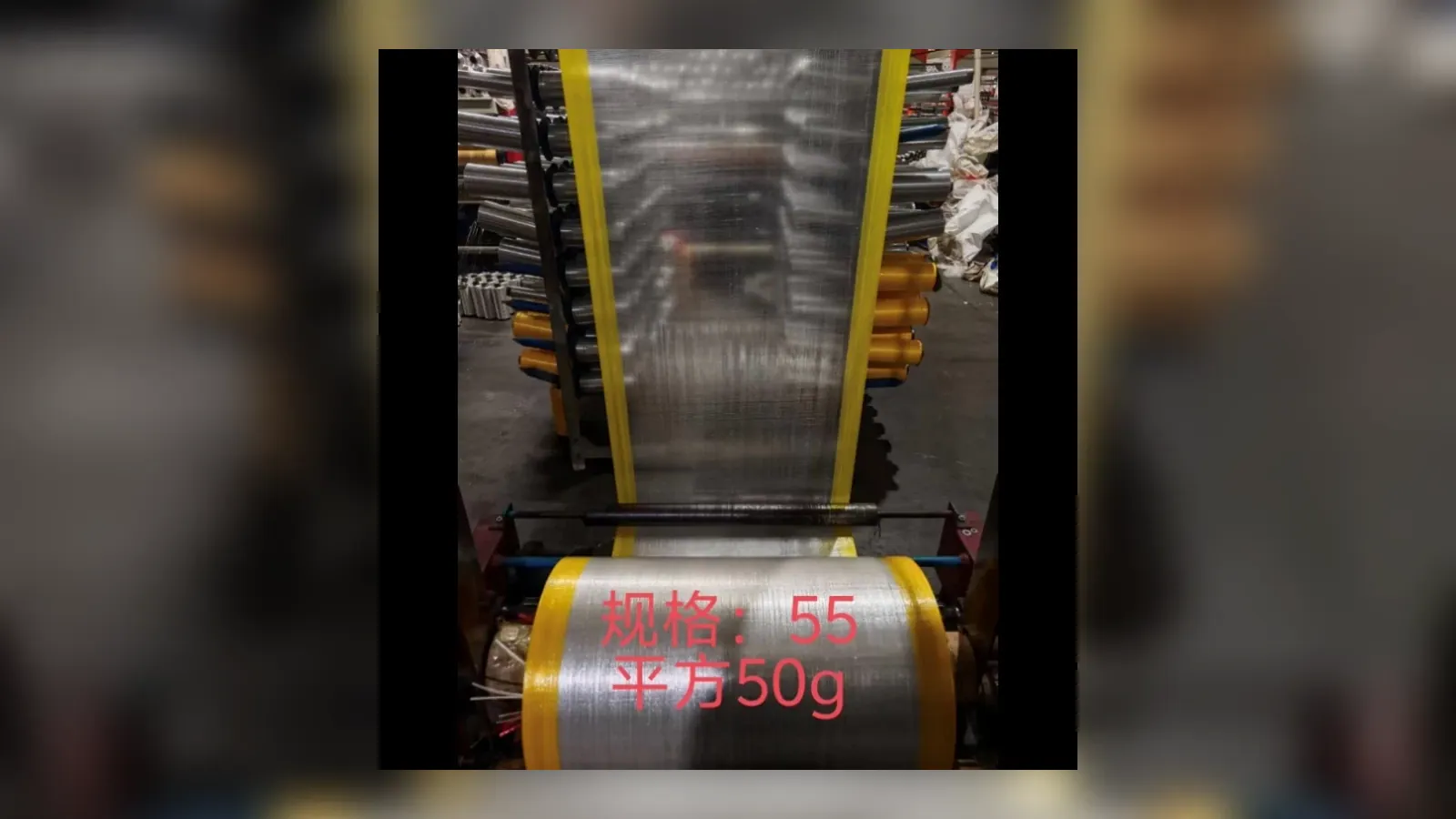
Quick answer: PP woven bag sizes should be selected from the actual product, target net weight, bulk density, filling equipment, closure method and distribution route. A flat width-and-length measurement is only a starting point; approve the final construction with a filled sample before placing a bulk order.
Start PP woven bag sizing with the packed product
Two products with the same net weight can require different bags because particle size, bulk density, flow behavior and trapped air change the filled volume. Tell the supplier what will be packed and provide both the target net weight and a representative product sample or filled-package reference when practical.
Document the filling method, spout or hopper dimensions, required headspace, closure style, stacking pattern and handling route. If the bag will be filled on existing equipment, the opening and usable length must work with that equipment rather than simply matching a previous nominal size.
| Sizing input | What the buyer should provide | Why it matters |
|---|---|---|
| Packed product | Material, form, particle size and flow behavior | Affects volume, leakage risk and filling |
| Target load | Net weight in lb and kg | Defines the package objective, not the dimensions by itself |
| Bulk density | Current value and test condition, if known | Helps estimate volume before trials |
| Filling line | Spout size, bag holder and filling sequence | Controls the required opening and usable length |
| Closure | Heat cut, hem, sewing, liner tie or other method | Consumes part of the flat bag length |
| Distribution | Pallet, stack, warehouse and transport conditions | Influences filled shape and stability |
Measure flat PP woven bag dimensions consistently
State whether width and length are measured on an empty bag laid flat. Identify the opening edge, the bottom construction and whether the stated length includes a hem, fold or sewing allowance. Photographs with a ruler can help, but the purchase specification should contain written measurement points and tolerances.
For U.S. buyers, show both metric and U.S. customary units to reduce conversion errors. NIST lists the conversion relationship between inch-pound and SI units; use controlled conversions in the specification instead of rounding measurements differently across the RFQ, artwork and purchase order.
- Record flat width from edge to edge without stretching the fabric.
- Record flat length from the defined bottom reference to the opening edge.
- Describe any gusset separately; do not hide it inside the flat-width value.
- Mark the usable fill height after the selected closure allowance.
- State measurement tolerances only after the supplier confirms the proposed construction.
For reference, 1 inch equals 25.4 millimeters and 1 pound equals 0.45359237 kilograms. The NIST Guide to SI conversion factors provides the official conversion framework.
Use existing PP woven bag sizes as references, not capacity promises
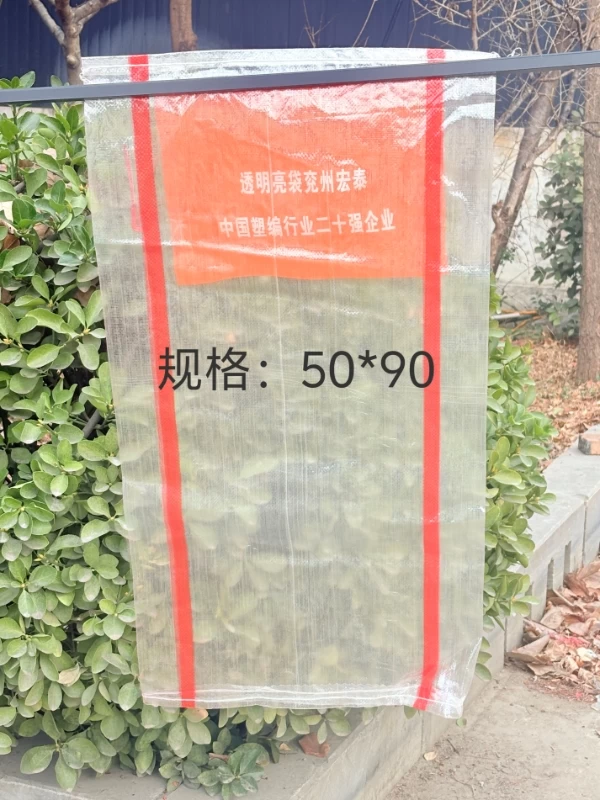
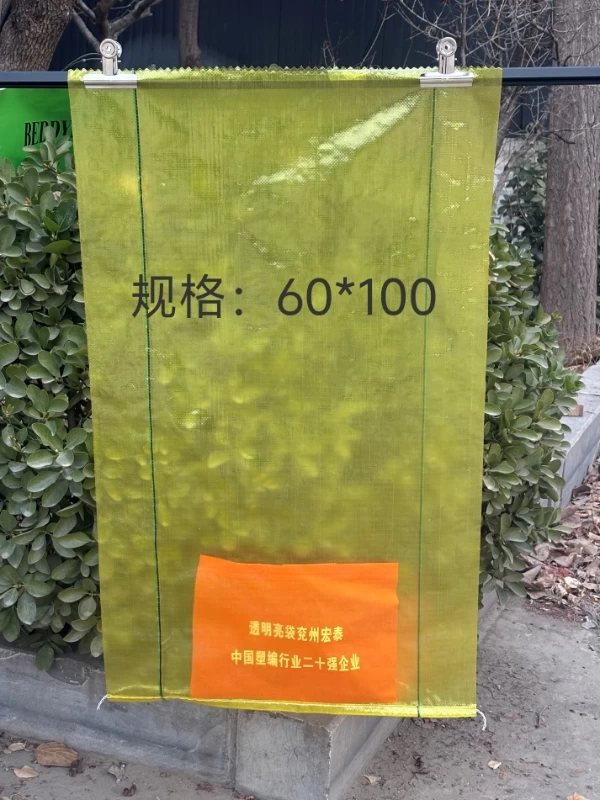
Hongtai currently shows transparent reference bags in 50 × 90 cm and 60 × 100 cm formats, plus a 55 × 85 cm perforated produce bag. These dimensions help begin a discussion, but they do not establish a universal load capacity.
| Reference format | Useful first comparison | Still requires confirmation |
|---|---|---|
| 50 × 90 cm transparent sack | Flat size, product visibility and edge identification | Material, fabric specification, closure, load and packing |
| 60 × 100 cm transparent sack | Larger flat format and filling-line fit | Filled dimensions, stack behavior and final construction |
| 55 × 85 cm perforated produce bag | Ventilation-hole layout and produce visibility | Product suitability, loss risk, airflow and handling |
A bag that holds the target weight in a hand-filled test may still be unsuitable for automated filling or stable palletization. Compare the filled length, width, thickness and center of gravity with the available equipment and pallet pattern.
Approve PP woven bag sizes through a filled-bag trial
- Freeze the trial inputs: use the intended product, target weight and proposed construction.
- Check the filling operation: observe bag mounting, product flow, dust or loss, headspace and operator handling.
- Close the bag: confirm that the remaining length supports the intended fold, hem or sewing process.
- Measure the filled package: record length, width and thickness at defined points.
- Build a representative stack: evaluate alignment, bulging, slippage and pallet overhang.
- Run agreed handling checks: include lifting, warehouse movement and transport simulation appropriate to the project.
- Identify the approved reference: connect the sample and measurement record to the purchase order.
Do not transfer an approval from one product to another without review. Changes in contents, load, fabric, coating, liner, perforation, seam or filling equipment can change the filled result even when the nominal bag size remains the same.
Send a size-specific RFQ that suppliers can quote
A quote request should connect the bag dimensions to the application. Include the packed product, material preference, flat width and length, target net weight, filling method, closure, printing, estimated order quantity, export packing, destination and requested delivery date.
If a value is not yet known, mark it as a decision to be confirmed with the supplier based on the final specification. Asking for a recommendation is more useful than copying an unverified GSM, weave or load rating from another bag.
Common PP woven bag sizing mistakes
- Choosing a size from net weight alone.
- Using outside filled dimensions as if they were flat bag dimensions.
- Omitting the closure allowance from the required length.
- Comparing supplier quotations built around different materials or constructions.
- Rounding metric and U.S. customary units differently across documents.
- Approving an empty bag without filling, closing and stacking it.
- Assuming a larger flat bag automatically improves load performance.
Buyer FAQ
What is a standard PP woven bag size?
There is no single standard size for every product. Use a current format as a reference, then confirm the final dimensions from the contents, fill weight, equipment, closure and distribution route.
Can a supplier calculate bag size from fill weight?
Fill weight alone is insufficient. Provide the product and bulk density, plus the filling and closing conditions; a filled trial should confirm the recommendation.
Should I specify dimensions in inches or centimeters?
Either can be used, but include both when U.S. and overseas teams share the specification. Identify the controlling unit and use consistent conversions.
How much extra length is needed for sewing?
The allowance depends on the proposed top construction, sewing method and filling process. Confirm it with the supplier and validate the usable fill height on a sample.
Does GSM determine how much weight a bag can hold?
No single value establishes complete bag performance. Fabric construction, dimensions, seams, optional layers, product behavior and handling all affect the result.
Can I use the same size for different grains or materials?
Only after comparison and testing. Products with different density, shape, moisture or flow behavior can fill the same flat bag differently.
What should I approve before bulk production?
Approve the written specification, measurement points, construction, artwork, filled sample, closure result, packing method and agreed inspection checks.
Request a PP woven bag size review
To evaluate PP woven bag sizes for a bulk order, submit the product type, material preference, required dimensions, application environment, target fill weight, customization, estimated quantity, export packing, destination country and requested delivery date through Contact Us. Include a current filled-bag photo or sample when available so the proposed size can be compared under realistic conditions.