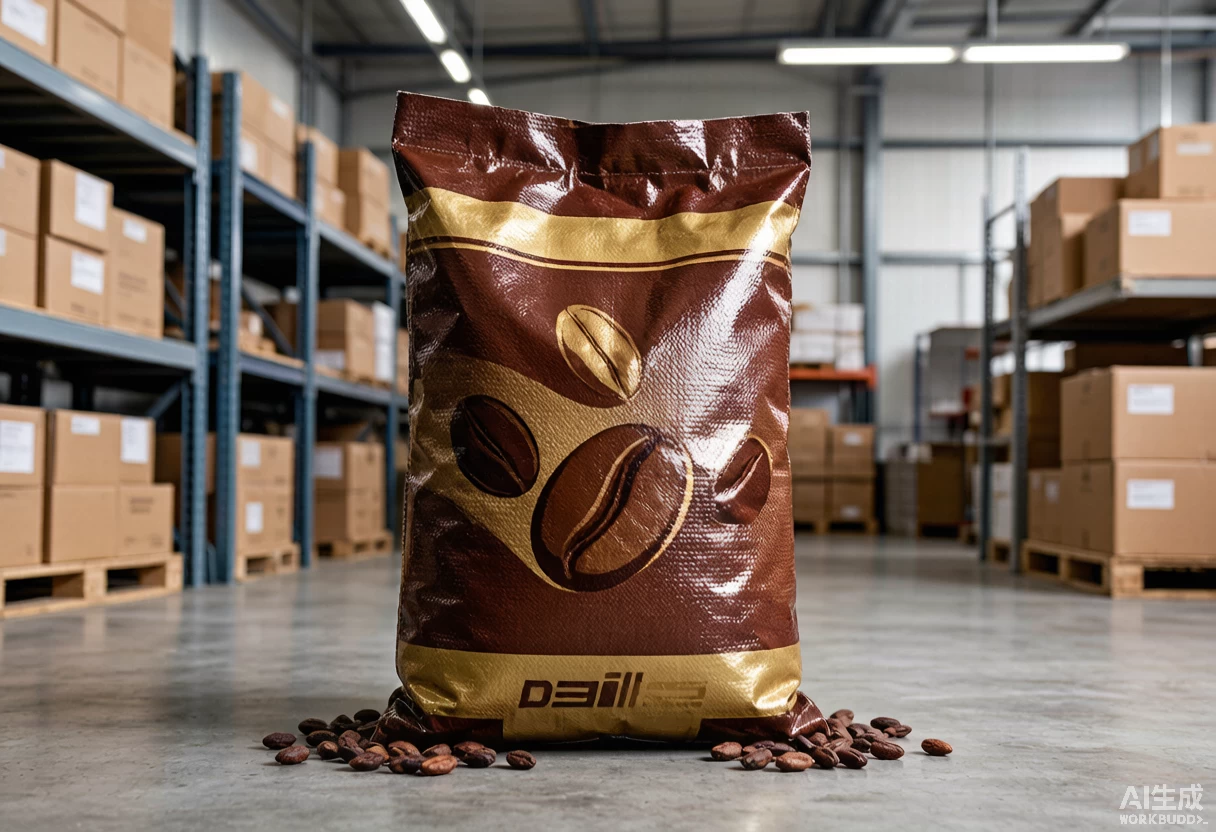
Quick answer: A quality custom printed PP woven bag is defined by three things approved together: the resin and fabric specification underneath, the print and lamination system on top, and the dimensions and closure that make it work on your packing line. For Southeast Asian brands — rice, coffee, cocoa, spices, animal feed and fertilizer — the bag is both packaging and advertising, so print adhesion, colour accuracy and material durability must be validated on an approved sample before bulk production.
Why printed woven bags are brand assets in Southeast Asia
Across Southeast Asia, the woven bag is not a throwaway container — it is the brand. A 25 kg bag of branded rice, a 60 kg bag of fertilizer, a coffee sack in a specialty roastery or a bag of spices on a market shelf all carry logos, product information and marketing messages that buyers see every day.
Retail and wholesale buyers in Indonesia, Vietnam, Thailand, the Philippines and Malaysia increasingly judge products by their packaging. A sharp, colourful, well-printed woven bag signals quality; a faded, peeling or misregistered print signals the opposite — even if the product inside is identical.
That is why print quality is a product-quality issue, not a cosmetic one. A laminated bag with delaminating film, an ink that rubs off in the container, or a colour that fades after a month in a humid warehouse fails the same way a weak seam does: it damages the product and the brand.
Material selection: start with the fabric
The print is only as good as the surface it sits on. Material decisions made at the beginning of the project control the finished result:
Virgin PP vs. recycled PP. Virgin polypropylene gives a clean, uniform surface for printing and consistent strength. Recycled resin can carry specks, uneven colour and odour — problems that show up as print defects. For branded food and agriculture packaging, most buyers specify virgin PP and ask the supplier to confirm the resin grade.
UV stabilization. Printed bags are exposed to strong tropical sun at markets, ports and farms. UV-stabilized resin keeps both the fabric and the print from degrading: unstabilized fabric becomes brittle, and even good ink fades faster on a fabric that is itself degrading. Specify UV treatment for bags that will be stored or displayed outdoors.
Masterbatch colour. The base fabric colour comes from pigment masterbatch. For white and light-coloured bags, high-quality masterbatch gives a bright, consistent shade; cheap masterbatch streaks, yellows or fades. Colour consistency across batches is a basic quality requirement — approve a colour standard and check it at inspection.
Reinforcement options. Anti-slip coating (e.g. 1/3 or 1/5 anti-slip on the face) improves stacking stability on pallets and in containers. A gusset makes the filled bag stand square. These are specification choices that affect how the printed bag performs in your logistics chain.
Coating vs. BOPP lamination
The surface treatment determines both the print quality and the bag’s barrier performance. Two options dominate the market:
BOPP lamination. A biaxially oriented polypropylene film is laminated onto the woven fabric. It provides the smoothest, glossiest printing surface and reproduces high-resolution, photographic artwork — typically 6–8 colour rotogravure. BOPP-laminated bags are the standard for branded rice, coffee, premium grains and consumer-facing agricultural products. The lamination also adds a degree of moisture protection and makes the bag feel premium in hand.
PE coating or lamination. Polyethylene coating seals the weave and provides a moisture barrier, which suits moisture-sensitive products like fertilizer, feed and some foods. Print quality on coated bags is usually simpler (commonly up to 4 colours) and the surface is less glossy than BOPP. Coating is a barrier-first choice; BOPP is a brand-first choice. Some constructions combine both or add a separate inner liner for demanding applications.
Ask the supplier to identify every layer in the proposed construction and the reason it is included. A laminated bag can be designed for print, for moisture, or for both — the specification must say which.
Print quality: what to check
When evaluating printed samples, check these points against your approved artwork:
- Colour accuracy. The printed colours must match the approved artwork within an agreed tolerance. Approve a physical printed sample under standard lighting — screens and digital proofs do not match rotogravure exactly.
- Registration. Multi-colour printing requires precise alignment of each colour layer. Misregistration shows as fuzzy edges, halos or colour fringing on logos and text.
- Ink adhesion. The ink must bond to the film or fabric surface. A simple rub test (dry and wet) reveals poor adhesion — ink should not transfer to a white cloth rubbed over the print.
- Coverage and opacity. Solid colour areas should be dense and even, without streaks or see-through patches.
- Lamination integrity. On BOPP bags, check for delamination at the edges, bubbles or wrinkles, and test peel resistance at a corner. The film must not lift during filling, handling or humidity cycling.
- Fade resistance. For bags that will face sun and humidity, confirm the ink system and, where practical, check colour after exposure. UV-stabilized fabric and quality ink systems slow fading, but no print is permanent in tropical sun.
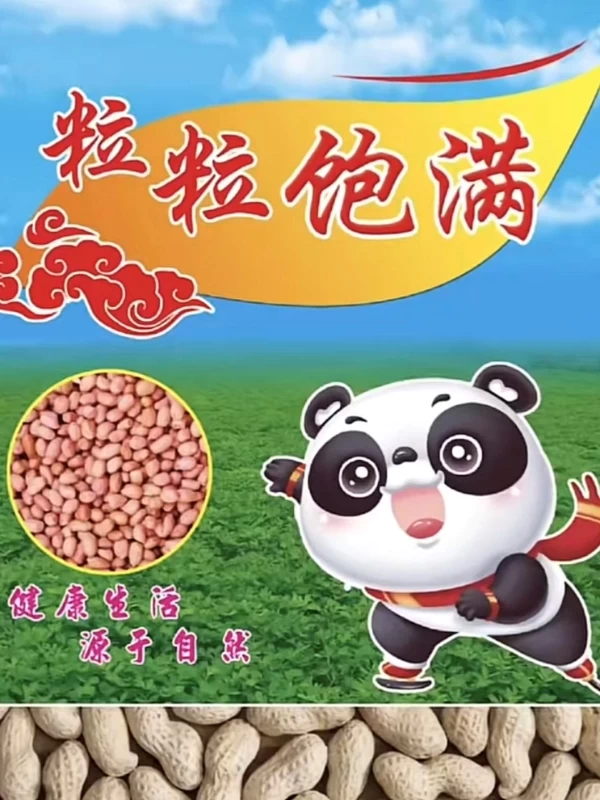
The custom printed peanut bags and sunflower seed bags shown on the Hongtai site are examples of colour-printed woven constructions; your artwork, ink coverage and lamination choice will define the final quality target.
The specification sheet every buyer needs
A complete printed-bag specification protects both buyer and supplier. It should include:
| Element | What to specify |
|---|---|
| Dimensions | Flat width × length, gusset if any, measurement points and tolerances |
| Fabric | Resin type, UV treatment, GSM, denier, weave count |
| Surface | Coating or BOPP lamination, gloss level, anti-slip option |
| Printing | Rotogravure colour count, print area and position, approved artwork reference and revision |
| Construction | Top style (heat-cut, hemmed, folded), bottom seam (fold count, stitch rows), liner if required |
| Closure | Heat seal, sewing, drawstring — matched to the packing line |
| Packing | Units per bale/bundle, wrapping, pallet or floor loading, labels and shipping marks |
| Quality | Sampling plan, dimensional and GSM checks, print and lamination checks, acceptance criteria |
Artwork control matters: artwork files must be versioned, and the print revision must be linked to the bag specification so a change in one cannot silently change the other.
Quality checks: from artwork to batch inspection
- Artwork approval. Supply high-resolution artwork (vector where possible) and approve a digital proof before plates are made.
- Pre-production sample. Approve a physically printed sample of the final construction — fabric, lamination, print and closure — before production starts. This sample is the quality reference for the order.
- Incoming material checks. Confirm the resin and masterbatch are as specified before production.
- In-line checks. Colour, registration, print adhesion and lamination integrity should be checked during production, not only at the end.
- Final inspection. Check dimensions, GSM, print appearance, lamination adhesion and packing count against the approved specification and sample.
- Container packing check. Confirm bale weights, counts, wrapping and loading plan before shipment, so empty bags arrive clean and square at your packing plant.
Application scenarios across Southeast Asia
Branded rice (Vietnam, Thailand, Indonesia, Philippines, Malaysia). BOPP-laminated 5–25 kg bags with full-colour branding, often including a transparent window for grain visibility. Print adhesion and colour accuracy are critical because the bag sits on supermarket shelves under bright light.
Coffee and cocoa (Vietnam, Indonesia, Philippines). Specialty roasters and exporters use printed woven sacks that balance rustic authenticity with sharp branding. BOPP lamination protects high-resolution artwork; breathable uncoated constructions suit green beans that need airflow.
Spices and ingredients (Indonesia, Vietnam, Thailand). Colourful, high-coverage printing on durable fabric, with strong moisture management where humidity is high. Small and medium formats (5–25 kg) dominate.
Animal feed (Indonesia, Vietnam, Philippines, Thailand). Heavy-duty printed bags for 25–50 kg feed. Strength and UV resistance lead; simple multi-colour printing carries the brand and feeding instructions.
Fertilizer (Southeast Asia-wide). Coated or laminated bags with moisture barrier properties, printed with product information and handling warnings. Print durability matters because bags are handled outdoors.
Buyer FAQ
What is the difference between a printed and a laminated bag?
Printing can be applied directly to the woven fabric, but lamination (usually BOPP) provides a smooth, glossy surface that produces far sharper, more vibrant print and adds protection. Laminated bags cost more but are the standard for branded consumer-facing packaging.
How many colours can be printed?
With rotogravure on BOPP-laminated bags, 6–8 colours plus varnish are common. Direct printing on coated fabric is usually limited to around 4 colours. Confirm the print method and colour count in the specification.
Will the print fade in the tropical sun?
All prints fade eventually, but quality ink systems on UV-stabilized fabric fade far more slowly. Specify UV treatment and, for critical applications, agree on a fade check. Avoid leaving bags exposed to direct sun for long periods.
What artwork format should I send?
Vector formats (AI, PDF, EPS) at high resolution are best for sharp printing. Provide fonts outlined, include bleed and safe margins as agreed with the supplier, and always approve a physical sample before production.
What is the minimum order quantity for custom printing?
MOQ depends on print area, colour count and bag size. Contact Hongtai with your bag size, artwork, quantity and destination to confirm the MOQ, plate costs, production schedule and shipping options.
Get a factory quote for printed woven bags
Send your bag size, contents and fill weight, artwork, colour and lamination requirements, quantity, packing and destination market through the Contact Us page. Hongtai will review the construction and print plan, confirm which details need a pre-production sample, and return a project-specific quotation for your brand.