Quick answer: Printed PP woven bags are produced by one of three routes — direct flexographic printing on the woven fabric, BOPP film lamination with reverse printing, or a printed liner or label. The route determines colour count, image detail, abrasion resistance and cost, and it should be chosen from the artwork and the handling the bag will receive rather than from price alone.
Three printing routes for PP woven bags
Printing is usually the most visible part of a woven bag project and often the part that generates the most rework. The available routes differ fundamentally in how the ink reaches the surface, which is why the same artwork can look sharp on one construction and coarse on another.
| Route | How the image is produced | Best suited to |
|---|---|---|
| Direct flexographic print | Ink printed onto the woven fabric surface | Bold graphics, few colours, cost-sensitive orders |
| BOPP lamination | Printed film bonded to the fabric, often reverse printed | Detailed artwork, photographs, high shelf impact |
| Printed liner or label | Print applied to a separate film or label layer | Product-specific branding over a standard sack |
Each route has a different surface to print on. Woven polypropylene tape is not flat: the tapes create a ridged texture with small gaps between them, so ink applied directly sits on an uneven surface. Film, by contrast, is smooth and holds fine detail reliably. Understanding this single difference explains most of the practical limits in woven bag printing.
Direct printing on woven fabric
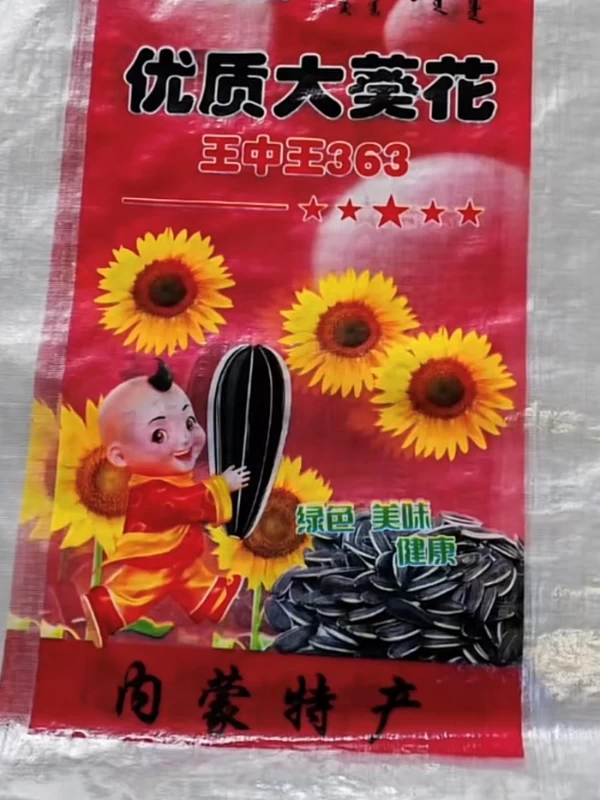
Direct printing is the traditional and most economical route. Ink is applied to the woven surface by a printing cylinder, so the number of colours corresponds to the number of cylinders and therefore to setup cost. Bold logos, large type and solid blocks of colour reproduce well, and the result is durable enough for agricultural and industrial applications where the print does not need to be pristine.
The limitations follow from the surface. Fine lines, small type and photographic gradients are difficult because the tape texture interrupts the image and ink can bridge the gaps between tapes unevenly. Very fine detail can also close up as ink spreads on the textured surface.
Direct print suits artwork that has been designed for it: strong shapes, generous type sizes and a limited palette. Artwork designed for a smooth substrate and then applied directly to woven fabric is a common source of disappointment, and it is usually avoidable at the design stage rather than at the press.
BOPP lamination and reverse printing
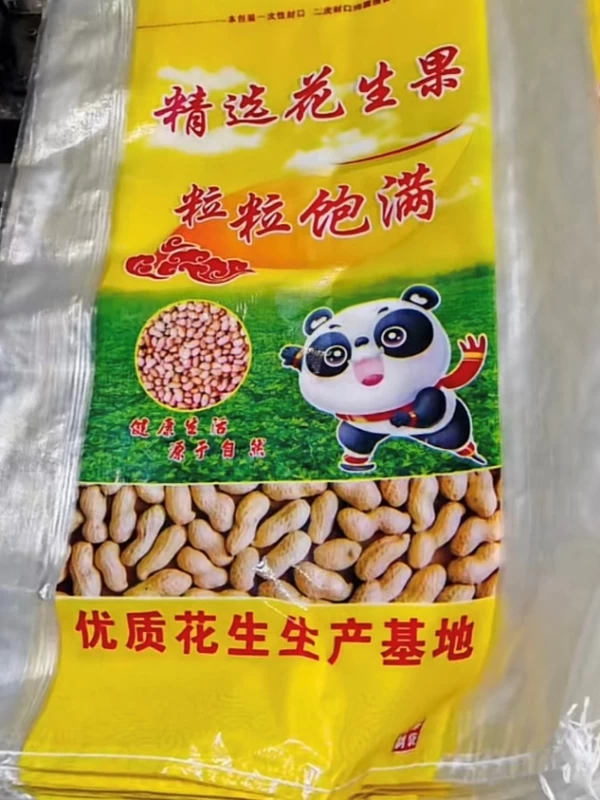
BOPP lamination bonds a biaxially oriented polypropylene film to the woven fabric. The film provides a smooth surface, so the printing that goes onto it can carry much finer detail, more colours and photographic imagery. In reverse printing the image is printed on the inside of the film before lamination, so the film itself protects the ink.
This protection is the main functional advantage. Because the ink sits behind the film rather than on an exposed surface, it resists abrasion, moisture and handling far better than direct print. For retail-facing products, promotional sacks and export packs where appearance influences purchase, lamination is usually the appropriate route.
Lamination also changes the bag physically. The film adds weight and barrier performance, modifies the hand feel, and affects how the fabric folds and prints around seams. It is an additional material and an additional process, so it should be specified and quoted separately from the base woven construction.
Preparing artwork that prints cleanly
- Start from the bag dieline and place artwork within the printable area, keeping clear of seams, folds and the closure allowance.
- Convert type to outlines or supply the fonts used, so text cannot reflow at the supplier’s end.
- Keep a minimum type size appropriate to the chosen route; fine text that works on film will close up in direct print.
- Define colours with a reference rather than screen values, and state which references must match exactly.
- Allow for the substrate by testing fine detail and small text in the first sample rather than after bulk approval.
- Supply vector artwork at a defined scale, with the placement of each element specified on the dieline.
A filled sample is the only reliable proof of artwork. Reviewing a printed bag in the hand shows how the texture, sheen and fold lines affect legibility in a way that a flat proof cannot.
Colour control and consistency
Colour consistency across repeat orders is a common concern for branded packaging. The practical control is to approve a physical standard and keep it on file, so each subsequent run is matched against the retained sample rather than reinterpreted from a digital file.
Colour also appears differently depending on the substrate and light source. Ink on a textured woven surface reflects light differently from ink behind a glossy film, and a match that satisfies a customer under daylight may look different under warehouse lighting. Stating the viewing condition when approving a standard removes most of this ambiguity.
Order quantity affects colour matching as well. Smaller runs of a custom colour or a multi-colour design carry proportionally higher setup cost, which is why print specifications often drive minimum order quantities more than the woven fabric itself does.
Print durability in handling and storage
- Abrasion: laminated and reverse-printed bags resist surface wear far better than direct print, which matters where bags rub against pallets and each other.
- Moisture: direct print on woven fabric can be affected by prolonged damp storage, while film-protected ink is largely shielded.
- UV exposure: extended sunlight can fade printed surfaces; where bags are stored outdoors, colour fastness should be specified.
- Friction in stacking: printed areas in contact with rough surfaces lose sharpness first, so critical branding should avoid high-contact zones.
- Handling equipment: hooks, forks and clamps damage print quickly; where the bag is machine-handled, expect direct print to show wear before the fabric fails.
For export consignments that spend weeks in transit and storage, print durability is worth specifying rather than assuming. A bag whose branding has rubbed off in transit has lost much of the reason for printing it.
To have artwork and a print route reviewed against a specific bag construction, send the packed product, required dimensions, target weight, artwork file, preferred print route and estimated quantity through Contact Us. Where several colours or photographic elements are involved, confirming the route before artwork is finalised avoids reworking the design later.
Buyer FAQ
What is the difference between direct printing and BOPP lamination?
Direct printing applies ink to the woven fabric surface, which suits bold graphics and few colours. BOPP lamination bonds a printed film to the fabric, which supports detailed multi-colour artwork and protects the ink behind the film.
How many colours can be printed on a PP woven bag?
There is no fixed limit, but each colour adds a print setup on direct printing, so cost rises with colour count. Laminated constructions can carry more colours and finer detail because the film provides a smooth surface.
Why does small text look blurry on woven bags?
Because the woven tape surface is textured rather than flat. Ink spreads unevenly across the tapes and can close up small lettering. Keeping type sizes generous, or choosing lamination, resolves most of it.
Can I print a photograph on a PP woven bag?
Photographic imagery generally requires a laminated or film-based surface. Direct printing on woven fabric cannot reproduce fine tonal gradation reliably, so photographic artwork should be planned around lamination.
How do I keep colours consistent between orders?
Approve a physical colour standard and ask the supplier to retain it. Repeat orders are then matched against the retained sample, and the viewing condition used for approval should be stated.
Does printing affect the minimum order quantity?
It can. Custom colours and multi-colour designs involve print setup that must be absorbed across the run, so print specifications often influence the practical minimum more than the base fabric does.