
Quick answer: A PP woven bag fabric specification is defined by grammage (GSM), yarn denier, mesh count, tape width and weave structure — not by GSM alone. Two bags with the same GSM can behave differently if the yarn, mesh or tape width differs, so the specification sheet should state all four values and the tolerance for each.
What a PP woven bag fabric specification contains
The woven body of a PP sack is produced from slit-film polypropylene tape, woven on circular or flat looms into a fabric tube or sheet. Its performance is determined by the combination of the raw material, the tape dimensions and the weave, so a complete specification describes all of them together rather than quoting a single number.
Buyers frequently receive quotations that state only grams per square metre. That value is useful for price comparison, but it cannot be used to predict strength, tear resistance, coating adhesion or printing quality. Two suppliers can quote the same GSM and deliver noticeably different products.
| Specification element | Typical expression | Why it matters |
|---|---|---|
| Grammage | g/m² (GSM) | Indicates fabric weight and broad durability band |
| Yarn denier | Denier (e.g. 900D, 1000D) | Affects tensile strength and tape stiffness |
| Tape width | mm (e.g. 2.0–3.0 mm) | Controls coverage, surface texture and printing base |
| Mesh count | Tapes per 10 cm, warp × weft | Defines weave density, air flow and permeability |
| Weave structure | Plain, twill or special | Changes strength and surface appearance |
| Coating or lamination | gsm of coating, BOPP film | Adds moisture barrier and print surface |
| Tolerances | ± % per value | Prevents disputes on measurement |
Grammage (GSM) and what it does not tell you
Grammage is the mass of the woven fabric per unit area, commonly measured in grams per square metre. It is the fastest way to sort bags into light, medium and heavy bands, and it is the value most often used when comparing quotations for the same application.
What grammage does not capture is how that mass is arranged. A 90 g/m² fabric built from wide, coarse tapes has a different surface, tear behaviour and printing response from a 90 g/m² fabric built from narrower, finer tapes. The first may feel stiffer and resist abrasion differently; the second may offer a smoother print surface. For flexible intermediate bulk-type performance and bag-to-bag consistency, the arrangement matters as much as the weight.
This is why an experienced buyer asks for the full construction when the bag is going into a demanding application. Where the fabric is measured also matters: grammage should be stated at a defined moisture condition, because polypropylene absorbs very little water but coated and laminated constructions can vary with conditioning.
Yarn denier and tape width
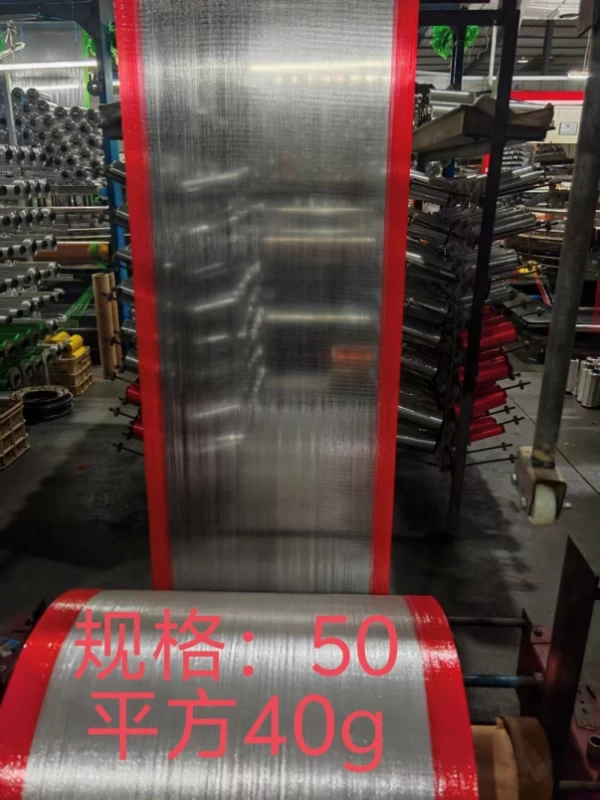
Denier describes the linear mass of the yarn or tape: the higher the denier, the heavier and generally stronger the tape for the same polymer and drawing condition. Common woven sack constructions use tapes in a middle denier range, but the useful figure is the denier actually run, not the range a supplier advertises.
Higher denier does not automatically produce a stronger bag. Drawing ratio, polymer grade, orientation and the evenness of the tape all influence how much of the theoretical strength reaches the finished fabric. A well-drawn medium-denier tape can outperform a poorly drawn high-denier tape in practice.
Tape width interacts with mesh count. For a given grammage, wider tapes mean fewer tapes per unit width and a coarser, more open look; narrower tapes mean more tapes and a finer, denser surface. Tape width also affects the printing surface: printed and laminated bags generally benefit from a smoother, more uniform base, which is why printing projects often pair a specified fabric with a coating or film layer.
Mesh count and weave structure
Mesh count is the number of warp and weft tapes counted over a fixed length, usually per 10 cm or per inch. It describes how tightly the tapes are packed and therefore how open or closed the fabric is. Open mesh supports airflow and is the basis of ventilated produce bags; dense mesh produces a more closed surface for moisture-sensitive or fine products.
Weave structure changes both appearance and mechanical behaviour. Plain weave is the standard for woven sacks and gives a balanced, stable fabric. Twill and special constructions can alter strength distribution, surface texture and the way the fabric drapes over a filled product.
Mesh and weave are also the reason why two fabrics of identical grammage can behave differently in the field. A ventilated onion bag and a laminated fertiliser bag can both be quoted at the same GSM while differing completely in mesh openness, coating and closure — and therefore in what they can actually be used for. Buyers who specify mesh alongside grammage avoid the mismatch between what was quoted and what was needed.
Compare two specifications properly
When quotations arrive from several suppliers, compare like with like. Align the values in one table before making a decision, and mark any value that was not stated rather than assuming a default.
| Value to compare | What to confirm | Risk if left unspecified |
|---|---|---|
| Grammage | Measured condition and tolerance | Price comparison on unequal fabric |
| Yarn denier | Actual denier run, not a range | Strength below expectation |
| Tape width | Nominal width and tolerance | Print quality and hand feel differ |
| Mesh count | Warp and weft, unit stated | Airflow and fill behaviour differ |
| Weave type | Plain or special construction | Appearance and drape differ |
| Coating | Type and applied gsm | Moisture barrier fails in storage |
| Test reference | Method used for each claim | Claims cannot be verified |
Where a supplier quotes strength or load capacity, ask which test method produced the figure. Tensile and tear testing of woven fabric follows defined standard procedures, and the ISO 13934-1 tensile test for textile fabrics is one widely recognised reference. A number without a method is a number that cannot be checked.
Write a fabric specification that can be quoted
- State the packed product and its behaviour so the supplier can match fabric to load and flow.
- Give the target grammage and the acceptable tolerance instead of a bare number.
- Name the yarn denier and tape width you expect, or ask the supplier to propose and justify a construction.
- Define mesh count with its unit and state whether airflow matters.
- Specify coating or lamination separately from the base fabric, since it is an additional material and process.
- Request a fabric sample and a measurement record before bulk production.
- Attach the agreed values to the purchase order as the inspection reference.
To review a fabric specification against a real application, send the packed product, target net weight, required dimensions, coating requirement and estimated quantity through Contact Us. A sample of a currently used bag, even a competitor’s, allows the proposed construction to be compared against a known reference.
Buyer FAQ
What GSM is a standard PP woven bag?
There is no universal standard. Light retail bags, medium agricultural sacks and heavy industrial bags all use different fabric bands, and the correct value depends on the packed product, the load and the handling route rather than on a single accepted number.
Does higher GSM always mean a stronger bag?
No. Strength depends on yarn denier, drawing quality, mesh count, weave and seam construction as well as weight. A heavier fabric with poor seams can fail before a lighter fabric with sound construction.
What is mesh count in woven bags?
Mesh count is the number of warp and weft tapes counted over a defined length. It indicates how tightly the fabric is woven and therefore how open it is to airflow and how the surface behaves.
How do I compare two quotations with the same GSM?
Ask both suppliers for yarn denier, tape width, mesh count, weave type, coating details and tolerances. If those values differ, the quotations are not describing the same product.
Should I specify a coating on the base fabric?
Only where the application needs it. A coating or lamination adds a moisture barrier and a print surface, and it should be specified with its own type and applied weight so it can be quoted and inspected separately.
What should I approve before bulk production?
Approve the written fabric specification, the physical sample, the measured values against tolerance, the closure and coating details, and the inspection checks that will be applied to the bulk order.