Quick answer: A quality ventilated PP woven produce bag is specified around the crop, its moisture and temperature behaviour, the fill weight and the time it will spend in sun, rain and humid warehouses. Ventilation pattern, tape strength, UV stabilization, bottom seam and closure must be validated on a filled sample with the actual crop — not chosen from a photo or a nominal size.
Why ventilation and quality matter for tropical produce
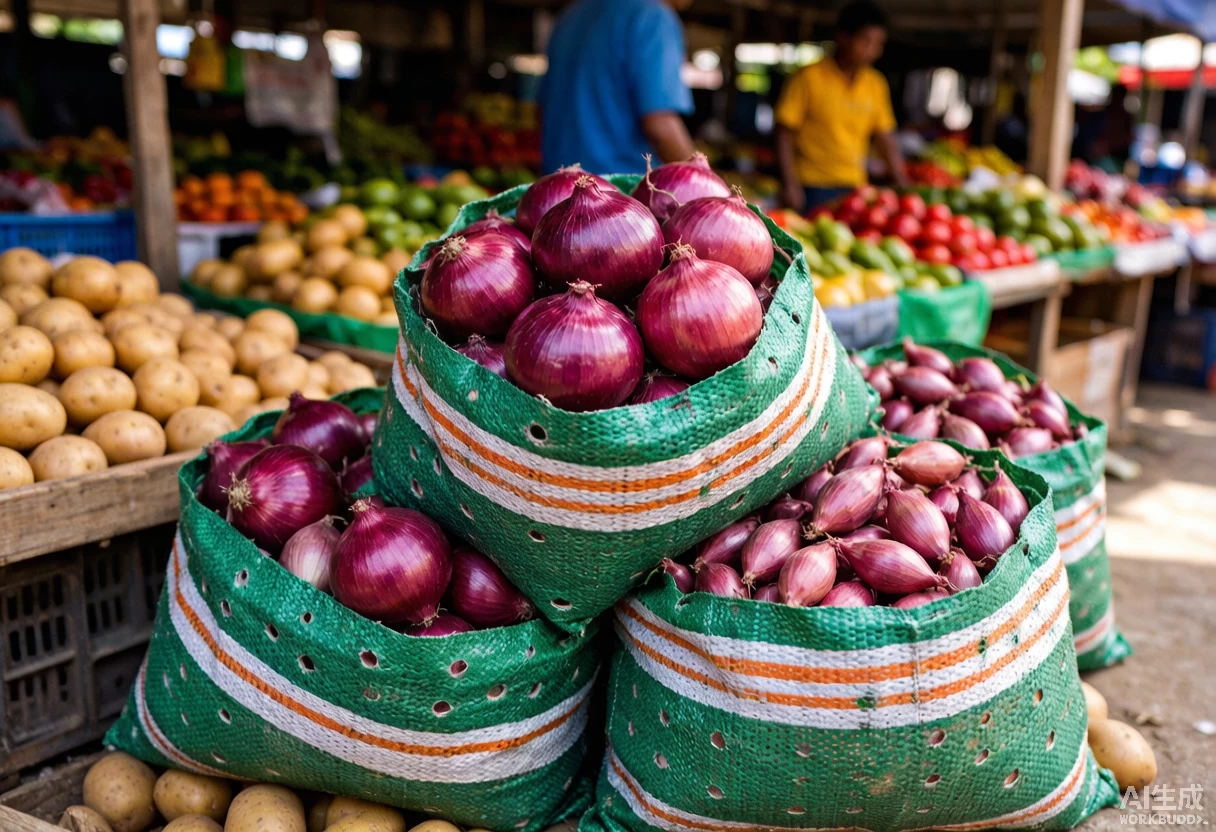
Onions, shallots, potatoes, garlic and chili are among the most traded produce crops in Southeast Asia. Indonesia is one of the world’s largest shallot producers; Vietnam, the Philippines, Thailand and Myanmar all run substantial onion, garlic and potato supply chains that move crop from farm to wet market, wholesale and processing in woven polypropylene bags.
These crops are alive after harvest. They respire, release moisture and heat, and they spoil quickly when trapped in airtight packaging. In the tropical climate — high ambient humidity, heavy monsoon rain and intense sun — three problems dominate:
- Condensation and rot. Warm, humid air trapped inside a non-ventilated bag condenses on the produce, accelerating fungal rot, sprouting and weight loss. Ventilation lets moisture escape and keeps the crop drier.
- Heat build-up. Fresh produce generates heat in the stack. Without airflow, the centre of the stack overheats, speeding up deterioration.
- Sun and rain damage. Bags wait in open fields, on trucks and in market yards. UV-stabilized fabric resists sun brittleness, while a well-made seam survives rain-soaked handling without bursting.
A good ventilated bag balances airflow with strength: enough openings to keep the crop dry and cool, but a construction strong enough to carry 10–25 kg of abrasive produce through rough handling.
Ventilation design: perforated woven vs. mesh
Two main constructions are used for ventilated produce packaging:
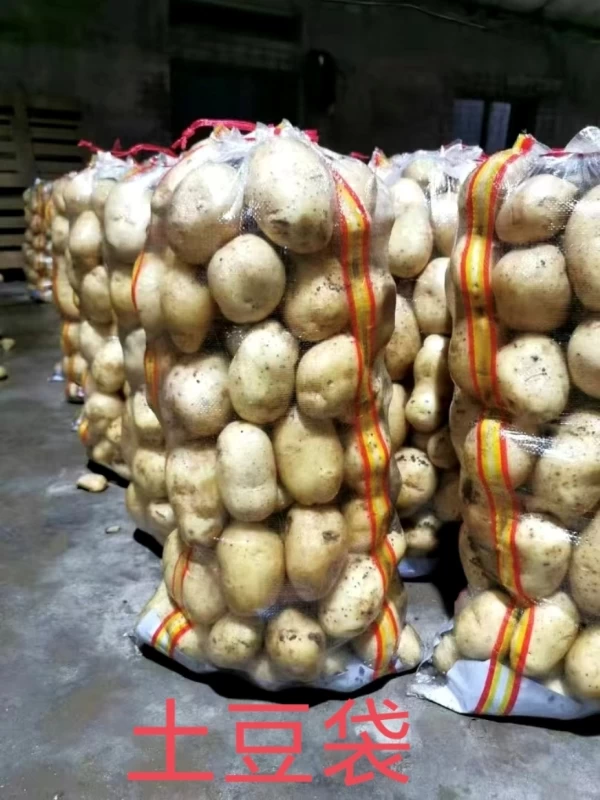
Perforated tubular woven bags. A standard PP woven fabric with ventilation holes punched through the finished bag. The number, size and pattern of holes are set by the buyer. Hongtai’s reference bag, the 55 × 85 cm 9-hole perforated PP woven potato bag, uses nine ventilation holes so air moves around the potatoes while handlers can see the crop inside. Perforated woven bags keep the strength and printability of woven fabric while adding targeted airflow.
Mesh and leno bags. An open-weave construction (leno or Raschel mesh) with large natural openings between tapes. These give maximum airflow and are common for retail-size onion and garlic bags. The trade-off is lower surface area for printing and, depending on mesh size, less protection against abrasion.
The right choice depends on the crop and the route:
- Long-haul wholesale (10–25 kg): perforated tubular woven bags balance strength, ventilation and stack stability — a good fit for potatoes, shallots and onions moving through multiple handling steps.
- Retail display (5–10 kg): mesh or perforated bags with drawstrings are popular for supermarket and wet-market display where shoppers want to see and squeeze the produce.
- Very humid or rain-exposed routes: ventilation is essential, but the opening size must be small enough to stop excessive water entry during rain and to limit dust loss.
When comparing options, ask the supplier to explain how the ventilation pattern addresses the specific crop and route — more holes is not automatically better if it weakens the bag or lets in rain.
Materials: tape strength and UV stabilization
Produce bags take more abuse per gram of product than most other woven bags — they are thrown, dragged, stacked wet and left in the sun. Material quality is therefore the foundation:
Virgin PP vs. recycled PP. Virgin polypropylene gives consistent tape tensile strength, clean handling and predictable performance, which matters for produce bags that must survive repeated handling without splitting. Recycled content is cheaper but can reduce tear resistance — acceptable for low-value, short-life routes, risky for export and long-distance trade. Confirm the resin grade with the supplier.
UV stabilization. This is the most under-specified quality feature for tropical produce bags. Bags sit on farm trailers, market yards and truck beds in full sun. Unstabilized PP becomes brittle within weeks of sun exposure; UV-stabilized fabric stays flexible for months. Specify UV treatment and ask how the supplier verifies it.
Tape strength and weave. The flat tape width and the weave density control both strength and the feel of the bag. A bag that feels flimsy when empty usually performs worse when filled and thrown. The supplier should be able to quote tape denier and weave count, not just a GSM figure.
Specifications for SEA produce bags
| Net weight | Typical SEA size (W × L) | Typical fabric weight | Common use |
|---|---|---|---|
| 5–10 kg | 30 × 47 / 35 × 60 cm | 55–80 GSM | Retail garlic, onion, chili, display mesh |
| 10–20 kg | 40 × 60 / 45 × 75 cm | 70–100 GSM | Shallots, onions, early potatoes, wholesale |
| 20–25 kg | 50 × 80 / 55 × 85 cm | 90–120 GSM | Potatoes, big onions, long-haul wholesale |
Beyond size and fabric, define the rest of the construction:
- Ventilation: number, size and position of holes (e.g. 9 holes × 4–6 cm), or the mesh opening specification.
- Bottom seam: single or double fold, single or double stitching. Double overlock stitching is the norm for produce bags that must survive heavy loads.
- Closure: open top for heat sealing, hemmed top, or drawstring for retail. The closure must match how the packer fills and closes the bag.
- Gusset (optional): a gusseted bag stands square when filled, improving stack stability on pallets.
A 55 × 85 cm perforated bag with nine holes, double-fold bottom and ~100 GSM fabric is a practical starting reference for 20–25 kg potato and onion wholesale — but confirm the construction against your crop, fill weight and handling route.
Quality checks before bulk ordering
- Fill a sample with your actual crop to the target weight, close it the same way you will in production, and check filled dimensions and shape.
- Check airflow behaviour. Confirm the ventilation openings stay open when filled and do not clog with soil or peel.
- Run a drop test on a filled bag (1.0–1.5 m is a common reference) and inspect the bottom seam and fabric for damage.
- Soak-and-sun test for tropical routes. Wet a filled sample, let it dry in the sun, and check for seam failure, fabric brittleness or colour change — a quick proxy for monsoon-season handling.
- Stack test. Stack filled bags at your planned height for 24–48 hours and inspect the bottom bags.
- Check stitching quality on production samples: stitch count per inch, thread type and seam alignment.
- Agree on batch inspection — sampling plan, dimensional checks (width, length, GSM) and how defects will be handled.
Application scenarios across Southeast Asia
Shallot and onion supply chains (Indonesia, Vietnam, Philippines). High-volume 10–25 kg bags moving from harvest to wholesale and wet markets. Ventilation prevents sweating; UV stabilization protects bags waiting on market floors and truck beds. Perforated woven bags with simple printing are the workhorse.
Potato trade (Vietnam, Indonesia, Philippines, Myanmar). Heavy, abrasive tubers demand strong fabric and a reinforced bottom seam. Perforated woven bags with 20–25 kg capacity are standard; double-fold, double-stitched bottoms reduce burst failures.
Garlic and chili retail (Thailand, Vietnam, Indonesia). Smaller 5–10 kg mesh or perforated bags with drawstrings suit supermarket and minimarket display, where shoppers inspect the produce through the openings.
Export of fresh produce. For cross-border and containerized movement, add moisture management to the specification: correct ventilation plus palletized, well-packed bales that keep empty bags clean and dry until filling.
Buyer FAQ
Are more ventilation holes better?
Not necessarily. Ventilation must match the crop and route: enough airflow to prevent condensation, but not so much that the bag weakens, leaks soil or lets in rain during storms. Confirm the pattern with a filled trial.
What is the difference between a perforated woven bag and a mesh bag?
A perforated woven bag starts as standard woven fabric and has holes punched through it, keeping most of the fabric strength and print surface. A mesh (leno/Raschel) bag is woven with an open structure, giving maximum airflow but less print area and abrasion protection.
How long can a UV-stabilized bag sit in the sun?
It depends on the stabilizer dosage and sun intensity. The key is to specify UV treatment and ask the supplier how it is verified, rather than assuming all bags are sun-resistant. For long outdoor storage, also protect the bags with tarpaulins where practical.
Can these bags be printed with my brand?
Yes. Perforated woven bags can carry simple colour printing, while bags with larger unperforated panels support more detailed branding. Confirm the printable area and artwork requirements with the supplier.
What should I send for a produce bag quotation?
Send the crop type and variety, typical fill weight, bag size, ventilation preference, filling and closing method, branding, export or domestic route, quantity and destination. Hongtai will confirm the construction, MOQ, production schedule and shipping options.
Get a factory quote for produce packaging
Send your crop, fill weight, bag size, ventilation requirements and destination market through the Contact Us page. Hongtai will review the construction — including the 9-hole perforated reference bag — and confirm which details need a filled-crop trial before the bulk specification is approved.